After the limited sleep that came after staring a python in the face, the issue at hand was clearer than ever, I still had not seen a buffalo and it was day 4. The day started as the rest had, 3:30 am wakeup call with cold breakfast options and a walk out on the patio. Already pushing 90 degrees, coffee was unwelcome and caffeination came via an orange South African drink provided by our hosts. A few distant trumpets from the exiting elephant herd reminded us they had been there all night, a brief roar from the local lion reminded us all that he was still king. We checked our rifles, inspected our ammo pouches and gathered the rest of our gear, this was our first day moving out of the Gaza province to what we hoped would be better luck.
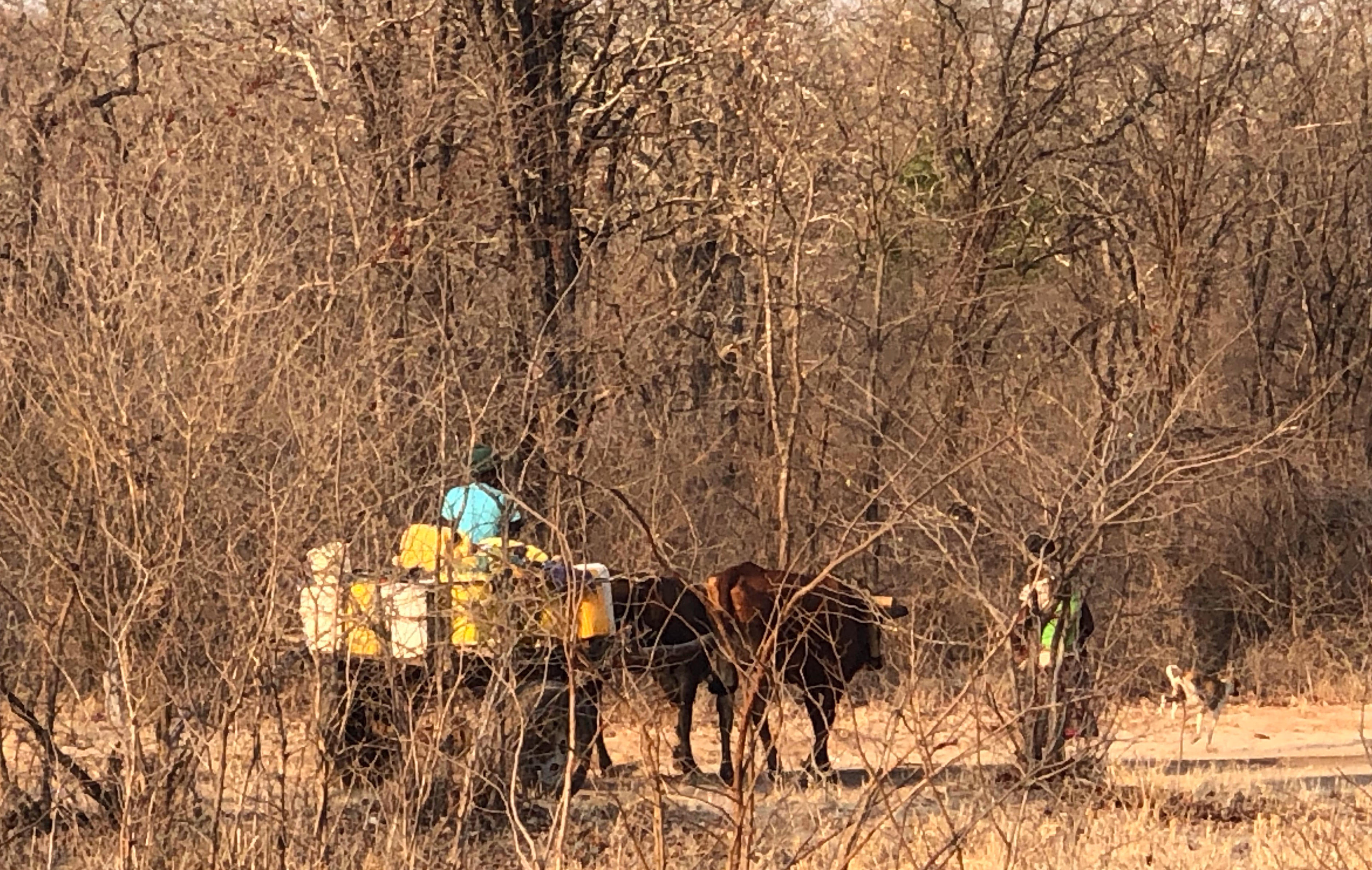
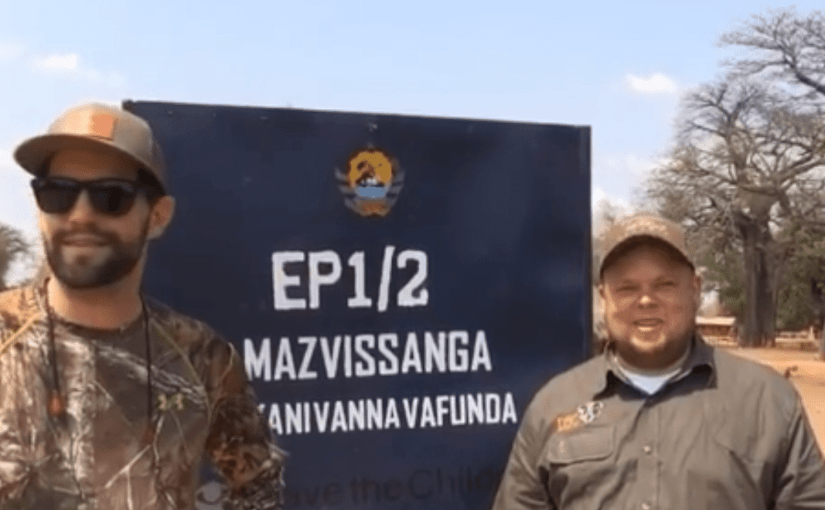
The drive into Mazvissanga took around two hours and was over roads that could dismantle an average suspension in short order. We made it just after sunrise driving down what we affectionately called “Main Street” or “Rodeo Drive” in the coming days. Clearly in vehicles that made us stand out, it took no time for all the kids to exit school and their homes, quickly rushing to see what or who had come to their little town. We parked outside of the local government house where a young man in a red Adidas golf shirt greeted our professional hunters (PH) before showing them inside. We were told to wait in the truck, partly to keep us sheltered from the bribing that would take place, partly to keep an eye on the truck and its contents.
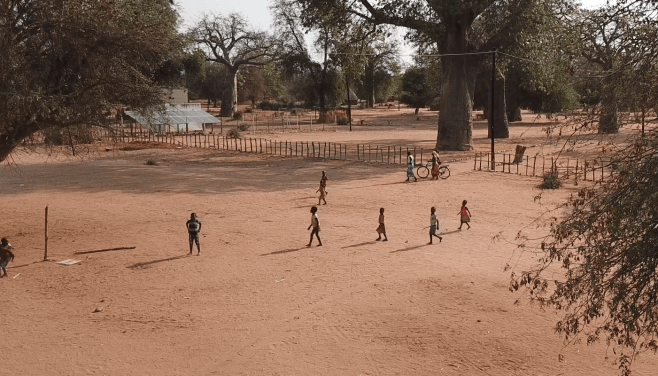
After being told this would take at least an hour, I couldn’t help but get the drone I had borrowed in flight, I knew it would blow these kids’ mind. While my hunting partner played makeshift soccer with a mixture of trash and tape fashioned into a rough sphere, I readied the drone, controller and cell phone. I placed it on the hood of our land cruiser and gave the take-off command, the noise of the 4 propellers quickly garnered the attention of 20+ kids as I flew it 20 ft off the deck up Main St. Soon, the excitement of soccer and modern technology shifted to boredom as the wait pushed past two hours and we still did not have permission to hunt. Around this time our PH’s emerged, visibly frustrated, the update brought more disappointment. The local government man had been sufficiently bribed but his superior in a town several hours away was mysteriously unable to receive the fax sent multiple times from our location. It was also clearly known that the paperwork had been filed correctly weeks earlier and we already had the permits to hunt the area. We were told to return the following day and we would have things in order then.

Now day 5, the pressure for success and the nervousness of failure was beginning to feel very heavy. Worried that the government folks would have more methods of extracting further cash, my hunting partner and our friend and PH Beans headed back out of Gaza to Mazvissanga. They would try their luck that morning while I hunted near camp with plans to join them in the evening if things were arranged. As had become the norm near camp, we saw very little other than common duiker and the occasional tiny ten animal that never gave a shot opportunity. We made it back to camp for lunch where we were joined by the rest of the group, we would be meeting the Chief that night for a blessing of our guns and plan to hunt the next morning… for buffalo.
The drive to the chief’s community was about 15 minutes past Main St but before we left town, we had been instructed to bring the chief provisions for the blessing. This included beer, palm wine, tobacco and cash. After bartering for these essentials in town, we headed to the chief for the blessing of our rifles. As soon as we exited the truck, we were told to remove our shoes and go sit with the chief at a makeshift setup including a few bowls, a cup and hand carved idols. The cup was filled with palm wine and the bowl with tobacco leaves that the chief ground between his fingers as he chanted and sprinkled the bits over our rifles. He poured some palm wine into the sand before taking a large drink and spitting a fine mist of milky white wine over our rifles and scopes. He then looked at us, smiled, and told us to get up in broken English. With our shoes back on and wine spattered rifles in hand, we loaded up in the trucks and headed back to camp… we were hunting buffalo in the morning.
The excitement resulted in little sleep but the adrenaline made it easy to stay awake on our drive back to the hunting grounds. We arrived on Main St at dawn and loaded up the chief’s son and the government man who would supervise the hunting and procurement of meat. We made it to the hunting area around 8 am and the scouting party headed down the hillside. Within 30 minutes a growing number of bees had taken interest in our location, so many that most of us had to shelter in the trucks. The heat meant we had the cars on which interestingly seemed to make the bees grow in number. We later figured out the drought was making the bees thirsty and they were drinking the condensation from the AC. The scouting party took about 2.5 hours to return, as time dragged on, we were told the longer they were gone the better as that meant they were on tracks. This proved to be accurate as they returned with good news and a location for the herd. We drove about 5 minutes down the road and across a large pasture to a tree line where we parked. There we loaded up with water, sunscreen, bug spray and our rifles before heading out into the bush. The area had been burned in some places after a recent harvest of corn and cotton which made for charred dust on everything but easy walking initially. Soon that gave way to waist high grass and thorns at nearly every turn, I am certain everything has thorns in Africa.
After walking about 5K, we had lost all sight of civilization and were staring a herd of buffalo in the eye. We worked a tree line for cover to get in position to judge the males on trophy quality and begin to make ready for a shot. By this time the sun was high and the temp had already reached 110, we took a break for water, to check our rifles and discuss a plan. Brandon would hunt first and I would hang back with the trackers while Beans tried to work into a position to get Brandon a shot.
The first attempt resulted in the heard getting to their feet and running through a tree line and coming to rest in another clearing. We worked them another time with the same result before getting Brandon into a good position. At this point we were about 7K on foot in 112-degree heat, legs bleeding from all of the thorns and covered in black char, plus the adrenaline of dangerous game, this was the most amped up I have ever been on a hunt. Nearly a week of trying and Brandon is on the sticks, finger on the trigger with the target bull in the reticle with sweat running in his eyes. He and Beans confirm that they are on the same bull, as soon as Beans begins to say yes comes the report of the rifle. The crack of the custom 416 Rigby from Montana Rifle Company was so loud and the bull so close that you could not hear the customary thwack of impact. As the heard moved off we slowly approached the location of the bull with no result. Brandon was sure he made a good shot but no one heard the impact. Within seconds we heard a death bellow 75 yds ahead of our location. We walked toward the sound but the tall grass made it difficult to see. Luckily, the animal moved enough to locate and we found him wrapped around the base of a tree, dead. A beautiful 40” + bull was down and Brandon was ecstatic.
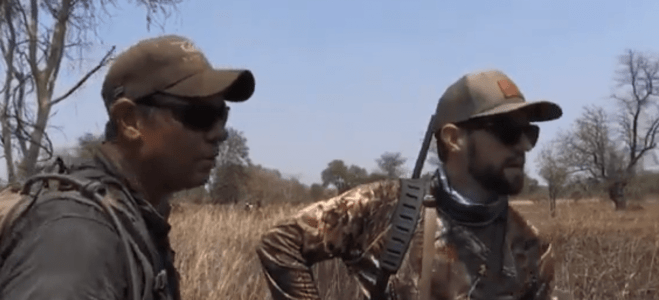
After we congratulated each other Beans noticed the herd was only 200 yds away and in the opening next to a tree line. He quickly told me to ready my rifle and follow closely behind him using the cover of a large bush. We stopped to glass the group at about 120 yds and located another trophy quality bull in the middle of the herd but surrounded by females and younger bulls. Beans grabbed the shooting sticks as we slowly moved away from the bush far enough to have a clear shot. The group was resting under the shade of three fever trees and seemed unthreatened by our presence. The bull seemed irritated however, thrashing his head side to side and looking at us frequently. I placed my rifle on the sticks and with my scope power at 4 I was able to easily locate the bull and see enough detail to make a good shot. After about 30 seconds, which seemed like 30 minutes, the cows were still not allowing a clean shot and I had to let my eyes rest. I continued to watch closely until it was clear the cow obstructing my shot was beginning to feed away from the trophy bull. Again, ready on the sticks at 110 yards I could see the bull’s chest come into clear view but his head continued to dip and swing obstructing his vitals and not allowing for a head shot. Beans stayed close, coaching me through the process, and in typical Beans fashion predicted what the animal would do next. He said that the bull will stop with his head in one direction soon, if I am comfortable with a frontal shot, I must take it then. We discussed anatomical land marks to ensure I was aiming correctly for the body position I was being offered. As if he was waiting for us to finish and on cue, the bull stopped and looked to his left holding his gaze on a cow. I settled my cross hairs just to my left of his midline and a little higher than my intended impact mark as I didn’t want to shoot too low and miss entirely. I slowly squeezed the trigger of my Winchester Model 70 in .375H&H Magnum until I felt it kick. That thing hurts every time I shoot it on the range but I must say that shot was painless as the adrenaline was through the roof as that bull crumbled into a cloud of dust on that dry and sweltering hot afternoon.

We approached the bull to find his head and front leg wrapped in a snare, more signs of the poaching that had ravaged that area of most game and clearly the cause of his head thrashing behavior. Many high fives and hugs ensued, as the adrenaline began to decline, the intense heat became a factor. We waited for the trucks left behind to make it through the thick bush and in that time, we realized how little water was left. Now at 116-degrees, the wait was miserable. Fortunately, the truck held water, food and all the gear needed to get these two massive beasts loaded up for transport. It took about an hour and a half for the trucks to arrive and another two hours to load the animals via ingenious methods I had not seen before. As we exited the province and headed back to camp each town came to great the trucks shouting “nyama,” a near universal word for meat in Africa. Once back in camp, we celebrated as the skinners got to work and the chief’s son and government man kept watch over the nyama.

So the conclusion on this hunt was old Africa is hard to hunt, the animals are harder to find, the areas are heavily poached and the systems in place for wildlife conservation do more to serve the government than the wildlife. This government group received thousands of dollars, hundreds of pounds of meat and did little to improve habitat or curb poaching. We did feed every tribe in the area for weeks to come and provided valuable protein to their diets that rely mostly on grain and other easy to farm staples. There are far easier places to hunt buffalo, there are places where the trophies are larger, but this was how my buffalo story is told and I am absolutely ok with that.

 Hunt 2 Travel